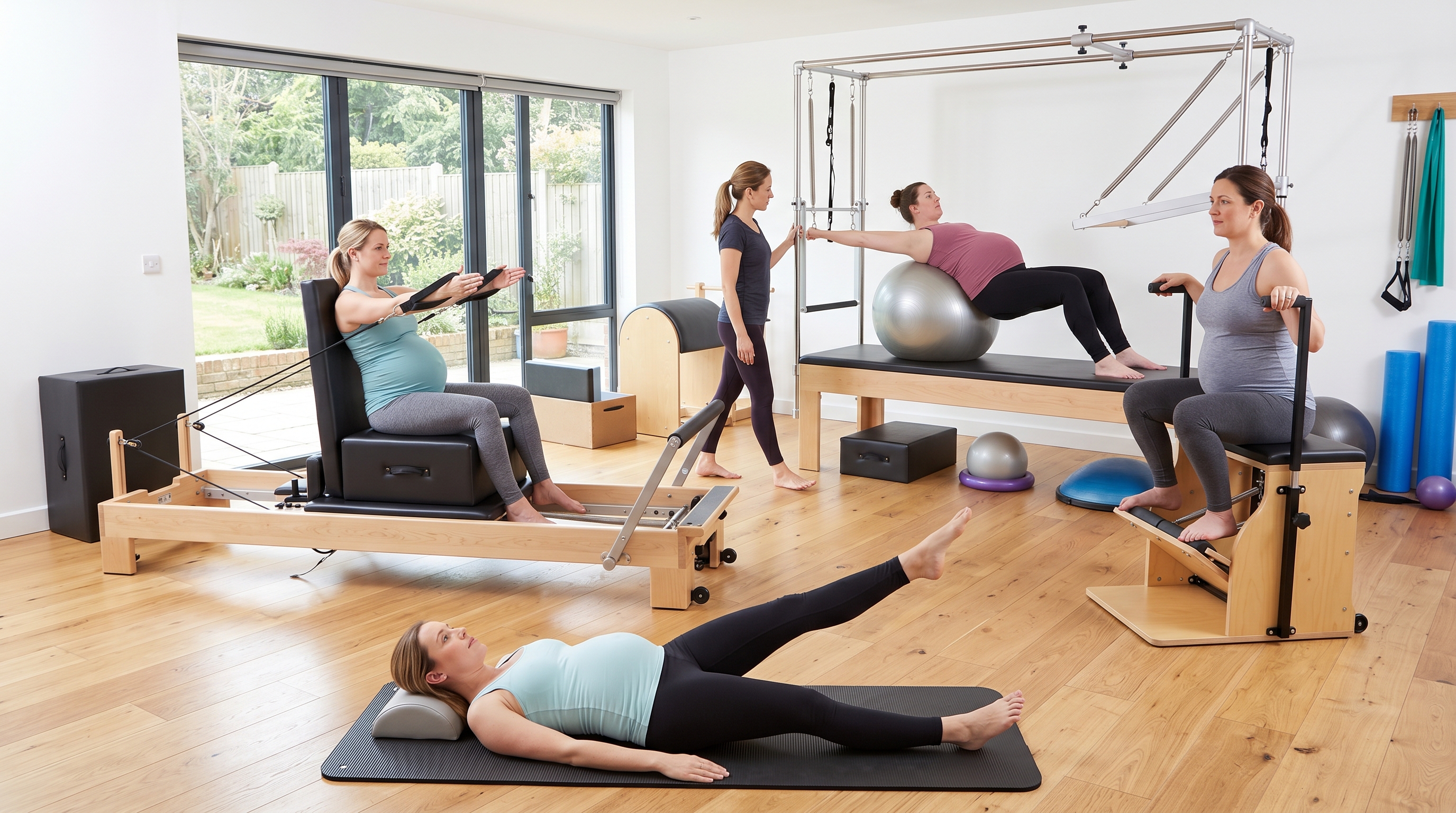
Pilates Through Pregnancy: Safe Modifications for Every Trimester
By PilatesStyle ·
The moment Sarah shared her news, a quiet joy settled over our studio. A dedicated Pilates enthusiast for years, she radiated excitement about becoming a mother, but also a flicker of apprehension. "I want to stay active," she told me, "I feel so good when I do Pilates. But how do I keep going? Is it even safe?" Her question is one I've heard countless times, echoing the sentiments of many women navigating the incredible journey of pregnancy. The answer, unequivocally, is yes – Pilates can be a profound ally throughout all trimesters, provided we approach it with knowledge, respect for the changing body, and intelligent modifications.
Pilates offers a unique blend of strength, flexibility, and mind-body connection that is incredibly beneficial during pregnancy. It helps maintain core stability, improve posture, alleviate common discomforts like back pain, and prepare the body for the demands of childbirth and recovery. As instructors, our role transforms into one of nurturing support, guiding our clients to move safely and confidently. Let's explore how to adapt our practice, trimester by trimester, ensuring a safe and empowering experience.
General Principles for Prenatal Pilates
Before diving into specific modifications, a few overarching principles should always guide our prenatal instruction:
Client-Centric Approach: Every pregnancy is unique. Encourage open communication about how your client is feeling each day.
Medical Clearance: Always ensure your client has physician clearance to exercise.
Listen to the Body: Emphasize intuition. If something feels uncomfortable or "off," stop and modify.
Hydration and Pacing: Encourage regular sips of water and allow for breaks as needed. Avoid overheating.
Breath Focus: Lateral thoracic breathing is paramount, providing oxygen to both mother and baby while supporting core engagement without bearing down.
Trimester-Specific Modifications: A Guided Approach
First Trimester: Laying the Foundation (Weeks 1-13)
Often, the first trimester is marked by fatigue, nausea, and emotional shifts. While the outward physical changes are minimal, profound internal work is happening. Our focus here is on maintaining consistency and energy levels.
Strategy 1: Energy-Pacing and Gentle Core Engagement
During this phase, the goal is to maintain a sense of normalcy in movement while being highly attuned to energy fluctuations. Avoid any exercises that feel overly strenuous or could induce nausea.
Example: For exercises like the Hundred, suggest lying flat if comfortable, but reduce repetitions or opt for feet on the floor. Focus on the breath and a gentle drawing in of the transversus abdominis (TVA) without excessive bracing.
In Practice: A client might feel great one day and utterly exhausted the next. We adapt by offering a gentler flow, perhaps focusing more on restorative stretches and breath work than a high-intensity workout.
Maintain neutral spine awareness in exercises like Pelvic Tilts and Cat-Cow, which are excellent for spinal mobility without putting stress on the abdomen.
Second Trimester: Embracing the Bloom (Weeks 14-27)
This is often referred to as the "golden trimester" as energy typically returns, and the growing belly becomes more apparent. However, new considerations arise, particularly the hormone relaxin, which softens ligaments, and the increasing size of the uterus.
Strategy 2: Supporting the Pelvic Floor and Transversus Abdominis, Avoiding Supine Positions
After approximately 20 weeks, it's crucial to avoid prolonged lying on the back (supine position) to prevent compression of the inferior vena cava, which can restrict blood flow to the baby and cause dizziness in the mother. This is an evidence-based concept critical for prenatal exercise safety.
Modifications: Transition to side-lying, seated, standing, or hands-and-knees positions.
Example: For the Hundred, move to a seated position with support, or a standing wall version. For Bridging, perform it on the back with caution and for shorter durations, or transition to a hands-and-knees variation like Bird Dog, focusing on maintaining a stable pelvis and engaging the TVA.
Pelvic Floor Focus: Incorporate gentle pelvic floor lifts (Kegels) and releases into movements, especially during exhalation. This helps prepare the pelvic floor for birth.
Open Stance: For standing exercises like Squats or Pliés, encourage a wider stance to accommodate the belly and maintain balance.
Third Trimester: Preparing for Arrival (Weeks 28-40+)
The final trimester brings significant physical changes: increased weight, a further shifted center of gravity, and often discomfort. The focus shifts to maintaining mobility, managing discomfort, and preparing for labor.
Strategy 3: Mobility, Pelvic Opening, and Gentle Support
Avoid any exercises that compress the abdomen, involve deep twists, or require significant balance. Prioritize movements that open the hips and chest, and support good posture.
Example: Mermaid can be modified by sitting on a cushion or bolster to elevate the hips, allowing more space for the belly. Focus on lateral flexion and gentle rotation, keeping the movement small and controlled.
Standing and Seated Work: Emphasize standing exercises with support (e.g., using a barre or chair) and seated exercises that promote hip mobility, like open-leg seated stretches or gentle knee-folds.
Breath and Relaxation: Integrate more breath work and gentle stretches, emphasizing relaxation and releasing tension, particularly in the hips and lower back.
In Practice Vignette: I remember teaching a client, Lena, in her 36th week. She loved her Reformer work but was finding lying supine increasingly uncomfortable even for short periods. We transitioned her Footwork to a seated position on the box, using the long straps for leg presses. This allowed her to continue strengthening her legs and glutes, maintain hip mobility, and connect with her breath, all while feeling supported and comfortable. It was a beautiful example of adapting the Pilates principles, not just the exercises, to her body's needs.
A Journey of Empowerment
Pilates through pregnancy is more than just a series of exercises; it's a journey of empowerment. By understanding the physiological changes and applying intelligent modifications, we can help our clients maintain strength, alleviate discomfort, and cultivate a deeper connection with their bodies and their babies. The principles of control, concentration, centering, precision, breath, and flow remain the bedrock of our practice, adapting to serve a new, profound purpose.
As instructors, our greatest gift to expectant mothers is the confidence to move safely and the knowledge that they are actively nurturing their bodies for the incredible journey ahead. Embrace the journey, listen to your body, and always consult with healthcare providers and a qualified prenatal Pilates instructor to ensure a safe and effective practice.