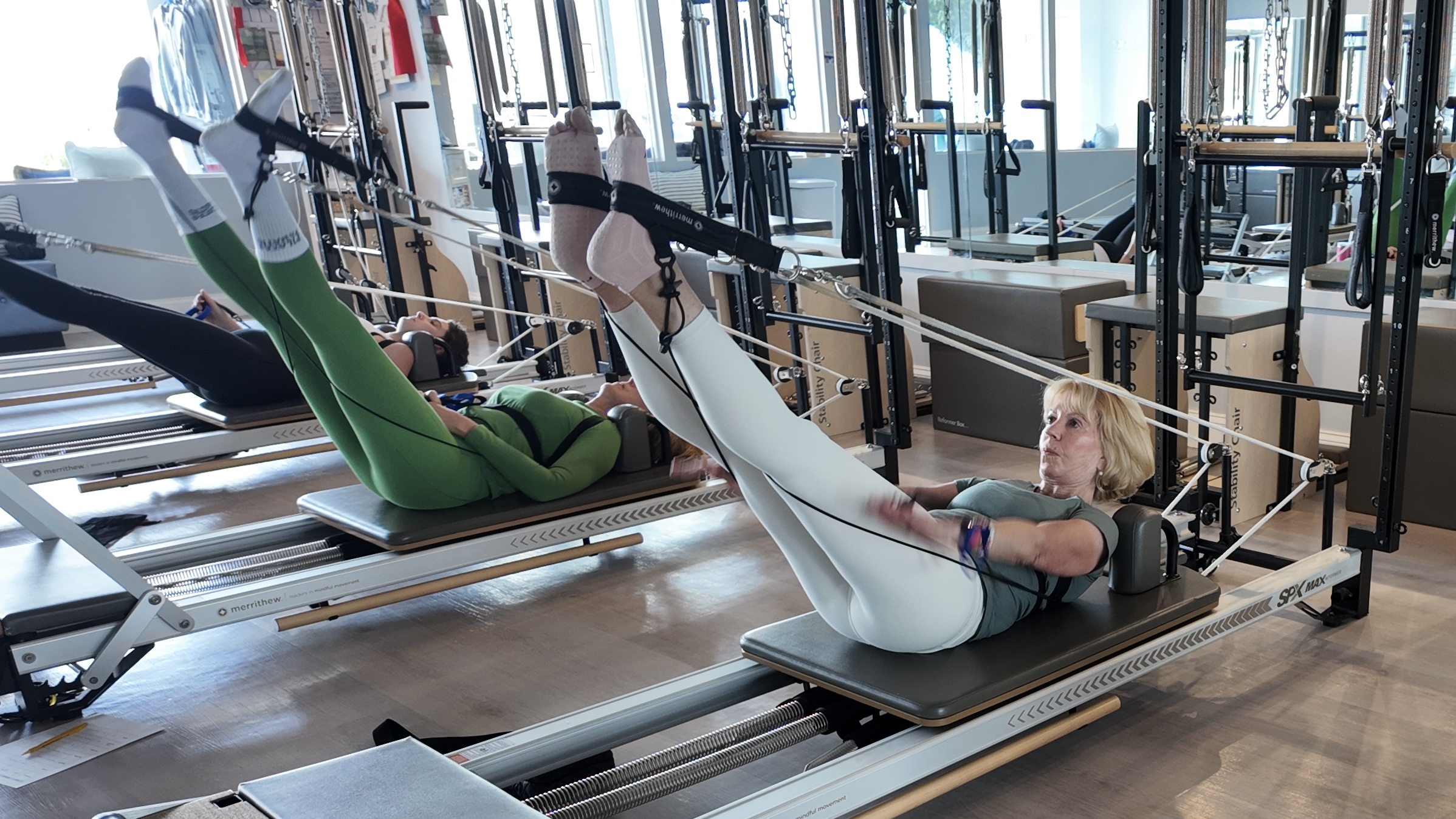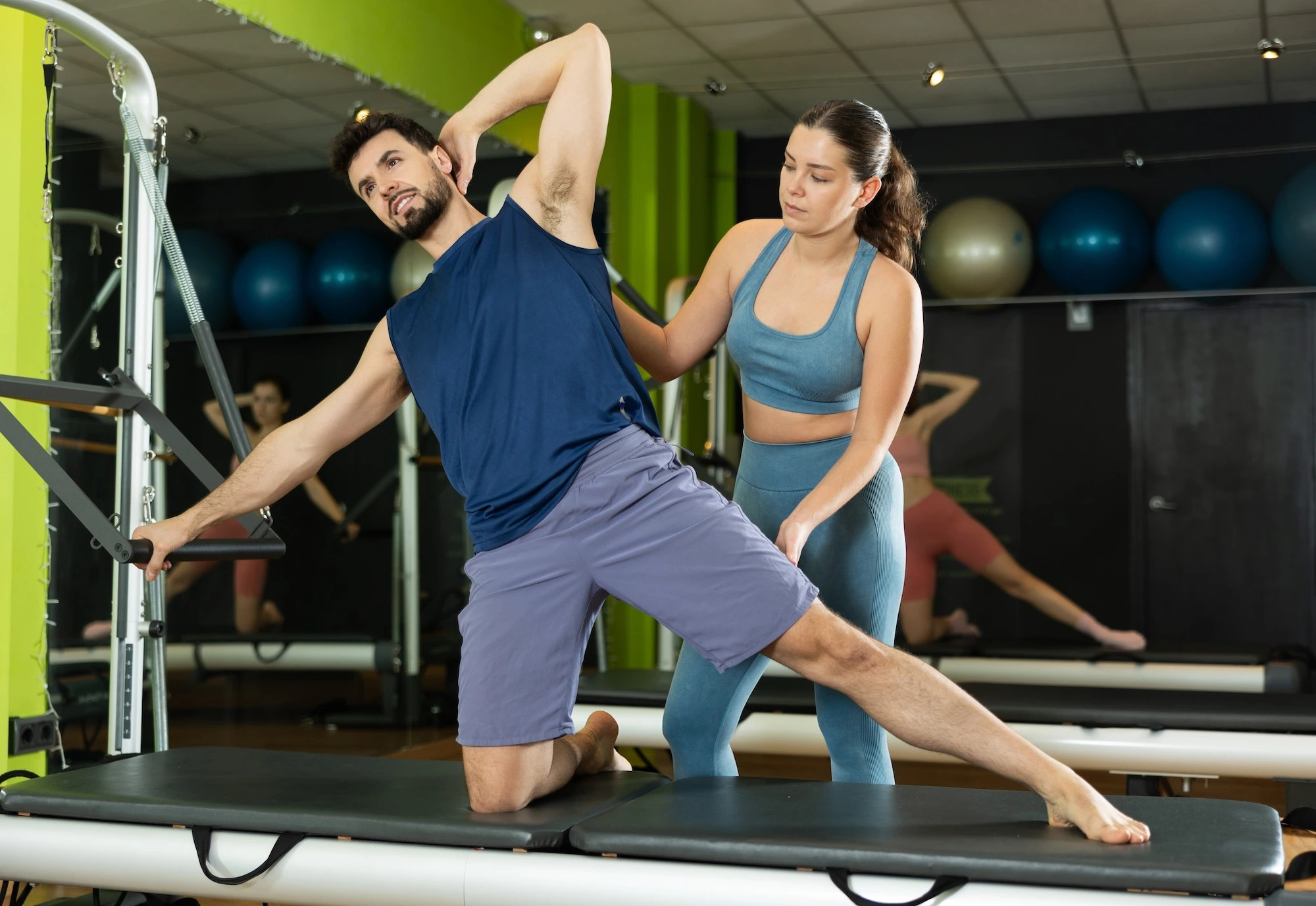
Men in Pilates. Is it new?
By PilatesStyle ·
The Men Who Never Left Pilates
Joan Breibart remembers when a man on a reformer might be Gregory Peck. Her sons’ decades of weekly practice offer another way to think about how men get started and why they stay.
By PilatesStyle®
Joan Breibart’s sons started doing Pilates as boys. About 35 years later, both are in their 40s and still do it every week. Their mother founded PhysicalMind Institute, so they had an introduction most boys of their generation didn’t. They learned Pilates early enough for it to become an ordinary part of their lives.
Breibart began practicing about 60 years ago. By the time she founded PhysicalMind Institute in 1991, she recalled, “the fitness industry ridiculed Pilates.” Still, she remembers men in the studio long before their presence could be called a trend. Bill Murray, Gregory Peck, Milton Berle and Vidal Sassoon were among them.
“But these men were the elite,” Breibart told Athletech News. “There were no regular people doing Pilates.”
That list says as much about access as it does about taste. A man could spend years in a gym without meeting anyone who could teach him how to use a reformer. A friend who practiced Pilates, a personal trainer who knew an instructor or a family member who brought him along could change that in a single afternoon.
Breibart has a blunt explanation for why the method found a wider audience. “What changed is that the fitness industry broke the bodies,” she said. “Pilates ‘won’ because fitness failed.”
A man walking into a studio today may still love the training he’s done for years. He might also have questions it hasn’t answered. A golfer might want to understand why he turns easily in one direction and feels restricted in the other. A lifter might want to know why one leg does more of the work when he squats. Either question gives a Pilates instructor a place to start.
“One physical attribute necessary for Pilates is flexibility,” Breibart said. She sees limited flexibility as one reason men stand to benefit from the method. In a first private session, an instructor can work with the range a client brings in that day. Change the spring setting, adjust his position and give him a few repetitions to notice what happens when he slows the carriage down. Now he has something specific to work on the next time he comes in.
A personal trainer can help make that first visit happen. An introduction as simple as “I know someone who can help you work on that turn” gives the client a reason to book and the instructor a question to explore. He knows why he’s there before he ever puts a foot on the reformer.
Breibart’s sons had the advantage of starting young. What stands out is that they kept going, through all the years when the rest of life could easily have crowded Pilates out. That’s a more interesting measure of success for a studio than how many men show up for an introductory class. How many of them are still coming on an ordinary Tuesday a year later?
Joan Breibart’s remarks appeared in Courtney Rehfeldt’s reporting for Athletech News.